
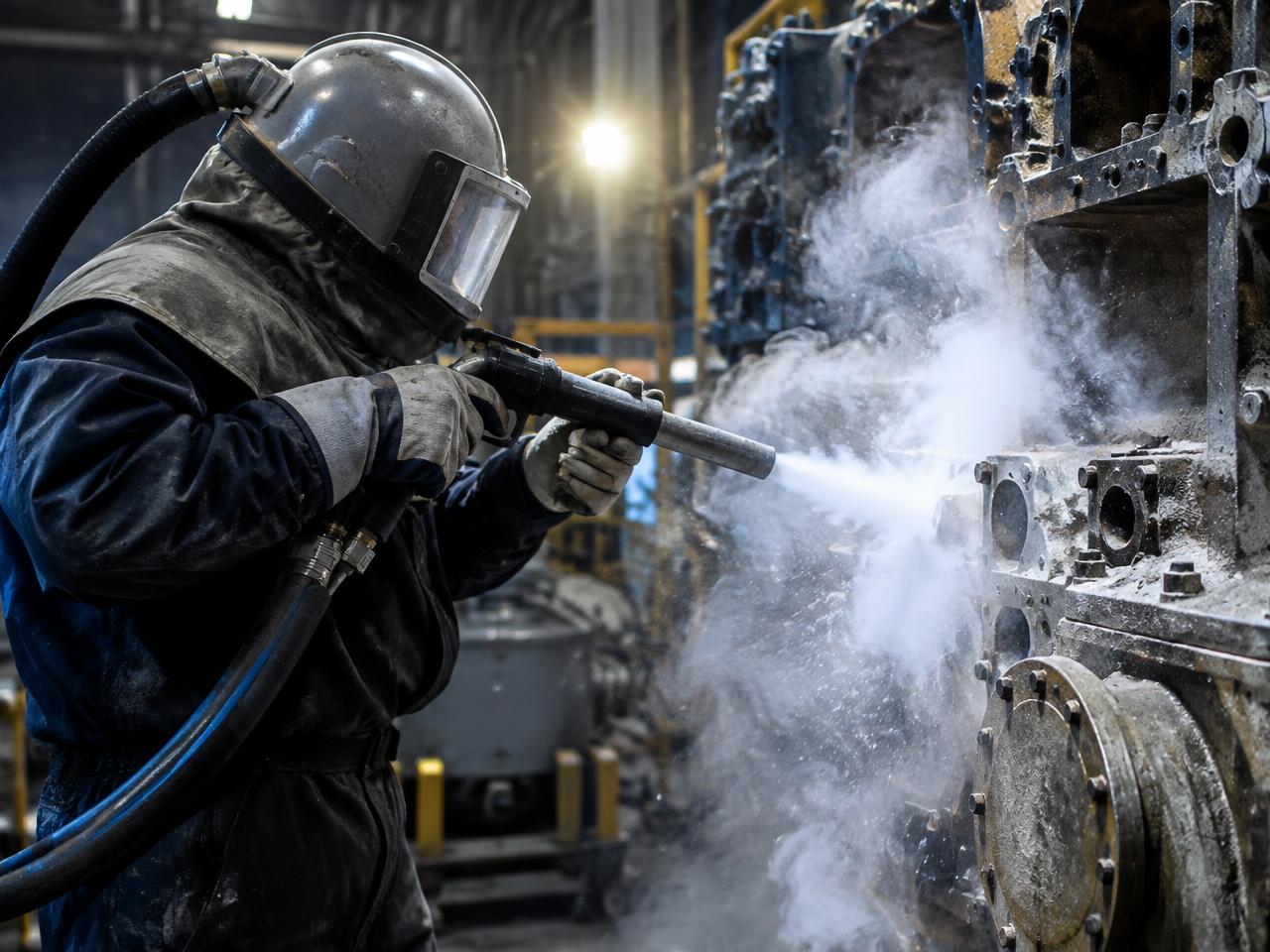
Operator dry ice blasting industrial machinery

Dry Ice Blasting

Why Choose Dry Ice Blasting?

Effective industrial cleaning without grit, water or harsh chemicals. Learn how it works, how it compares, and when another method is the better call.

The basics

What Is Dry Ice Blasting?

Dry ice blasting uses compressed air to fire small pellets of solid carbon dioxide at a surface. The pellets remove the contaminant, then turn into gas, leaving no blast media behind.

  1. 1. Impact: Pellets strike at high speed and fracture the contaminant.

  2. 2. Thermal shock: At –109.3°F the contaminant shrinks and loses its bond.

  3. 3. Sublimation: Pellets turn to gas, expanding and lifting grime away.

See it on your application — request a demonstration →
Operator dry ice blasting industrial machinery

Comparison

Dry Ice Blasting vs. Other Cleaning Methods

Dry Ice Blasting

Abrasive
No
Secondary waste
No
Environmentally responsible
Yes
Toxic
No
Electrically conductive
No

Abrasive Blasting

Abrasive
Yes
Secondary waste
Yes
Environmentally responsible
No
Toxic
Varies*
Electrically conductive
No

Soda Blasting

Abrasive
Yes
Secondary waste
Yes
Environmentally responsible
No
Toxic
Varies*
Electrically conductive
No

Pressure Washing

Abrasive
No
Secondary waste
Yes
Environmentally responsible
No
Toxic
Varies*
Electrically conductive
Yes

Solvents / Chemicals

Abrasive
No
Secondary waste
Yes
Environmentally responsible
No
Toxic
Yes
Electrically conductive
N/A

Hand Tools

Abrasive
Yes
Secondary waste
No
Environmentally responsible
N/A
Toxic
N/A
Electrically conductive
N/A

* Toxicity depends on the media, chemicals and contaminants involved. General comparison only; results vary by application.

Operational advantages

Core Benefits — and Where They Show Up

Less Secondary Waste

Sand, soda and grit media leave spent media that must be contained and disposed of along with the contaminant. Pressure washing creates contaminated runoff. Dry ice pellets sublimate on impact, so the only thing left to clean up is the contaminant itself.

In practiceFoundry core boxes and casting dies can be cleaned without grit ending up in cavities, vents or the surrounding area.
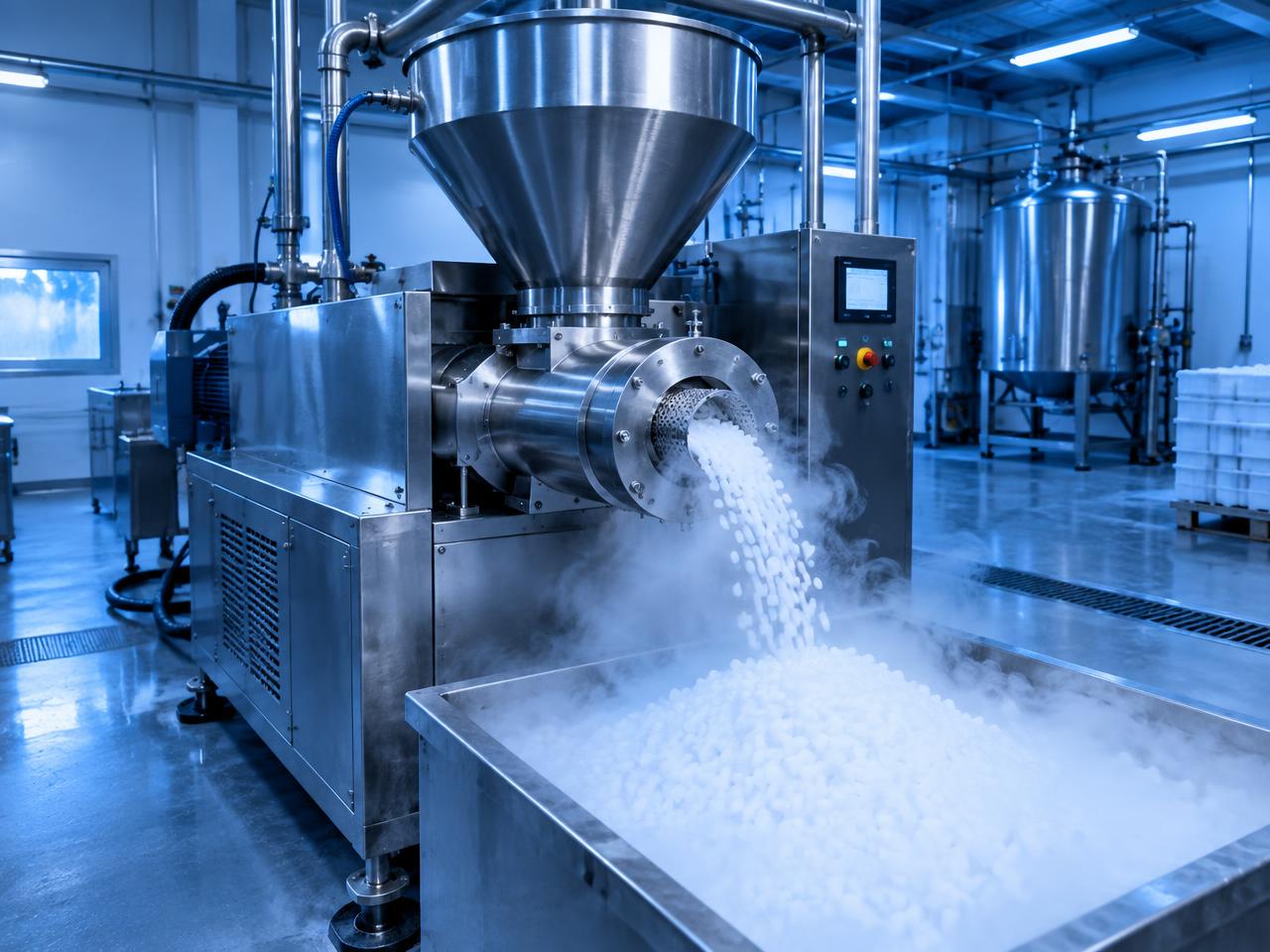
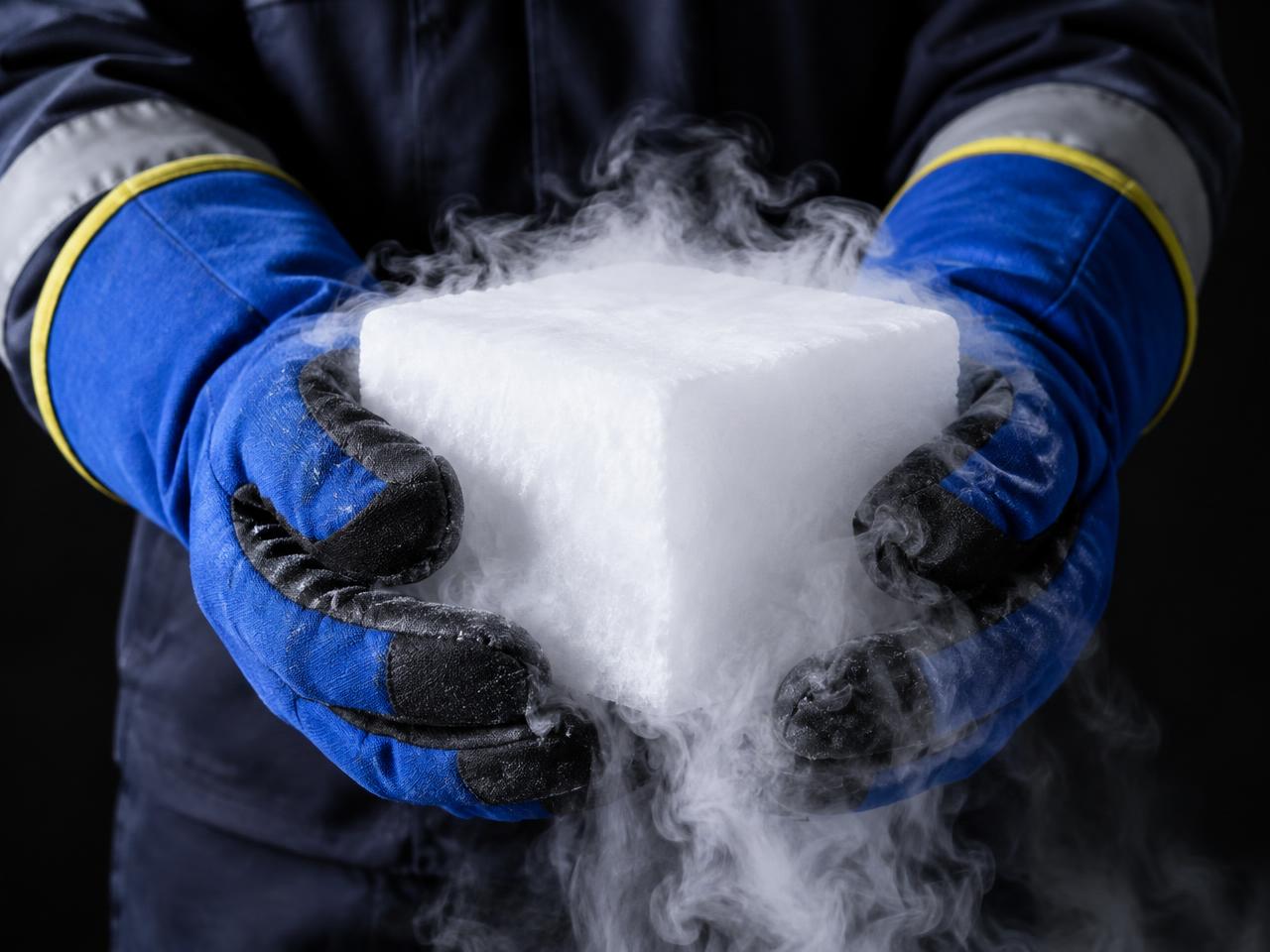
Moisture-Free & Non-Conductive

Dry ice goes straight from solid to gas with no liquid phase. It leaves equipment dry and is non-conductive, which is why it's used on electrical components. Work on or near energized equipment must follow qualified electrical-safety procedures.

In practiceFood plant ovens and conveyors, motor windings and control cabinets can be cleaned without water that has to dry or drain.

Potential Downtime Savings

Machinery can often be cleaned while warm and assembled, reducing disassembly, reassembly and cooldown time. It also cuts manual scrubbing, chemical soaking and secondary-waste setup. Actual savings depend on the application.

In practiceInjection and rubber molds are commonly cleaned in the press, without removing them and waiting for them to cool.

Surface Compatibility

Unlike grit, dry ice pellets generally don't scratch, wear or pit substrates, and dry ice blasting replaces many solvents and chemical cleaners. Delicate surfaces should still be tested first.

In practicePolished molds, rubber press plates, copper and historic stone or brick are typical uses where abrasives would cause damage.

About the CO₂: the CO₂ used to make dry ice is typically recovered as a byproduct of other industrial processes rather than produced specifically for blasting. It is released as the pellets sublimate, so ventilation is still required.

Wondering how it would work on your equipment?

Discuss Your Cleaning Application

Honest limits

When Dry Ice Blasting May Not Be the Best Choice

Consider another method for

  • Heavy rust or coatings where recoating needs an abrasive surface profile — dry ice doesn't create one
  • Very hard or thick deposits, such as cured concrete
  • Thin coatings, decals, soft materials or worn paint you want to keep

Also plan around

  • Large areas of loose mud or dirt where water is cheaper and faster
  • Small, poorly ventilated spaces without CO₂ monitoring and ventilation
  • Noise-sensitive environments — blasting is loud
Monitoring CO₂ indoors? See CO₂ Sensors.

FAQs

Dry Ice Blasting Questions

What is dry ice blasting?

It's a cleaning method that uses compressed air to fire solid CO₂ (dry ice) pellets at a surface. Impact, extreme cold and sublimation work together to remove contaminants without water, chemicals or leftover blast media.

Does dry ice blasting leave any residue?

The dry ice itself sublimates into CO₂ gas, so no blast media is left behind. The contaminant that's removed still needs to be cleaned up.

Is dry ice blasting safe for delicate surfaces?

It's non-abrasive and is commonly used on molds, rubber, plastics and copper. Results depend on the substrate and contaminant, so a test area or demonstration is recommended for delicate surfaces.

Is dry ice blasting environmentally friendly?

It uses no water or cleaning chemicals and creates no secondary media waste, and the CO₂ is typically reclaimed from other industrial processes. It does release CO₂ as the pellets sublimate, so it isn't emission-free.

Do I need special ventilation?

Yes. Dry ice releases carbon dioxide gas, which can build up in enclosed spaces. Adequate ventilation and CO₂ monitoring are important, especially indoors or in confined spaces.

Is it more expensive than other methods?

It depends on the job. Dry ice is consumed as you clean, but savings in downtime, disassembly and cleanup can offset that. For some jobs, such as loose mud, water is the more economical choice.

Have a cleaning challenge?

Tell us the surface, what needs removing and where — the PA Dry Ice team will follow up.

Discuss Your Cleaning Application