Services · Demonstrations
See Dry Ice Blasting on Your Application
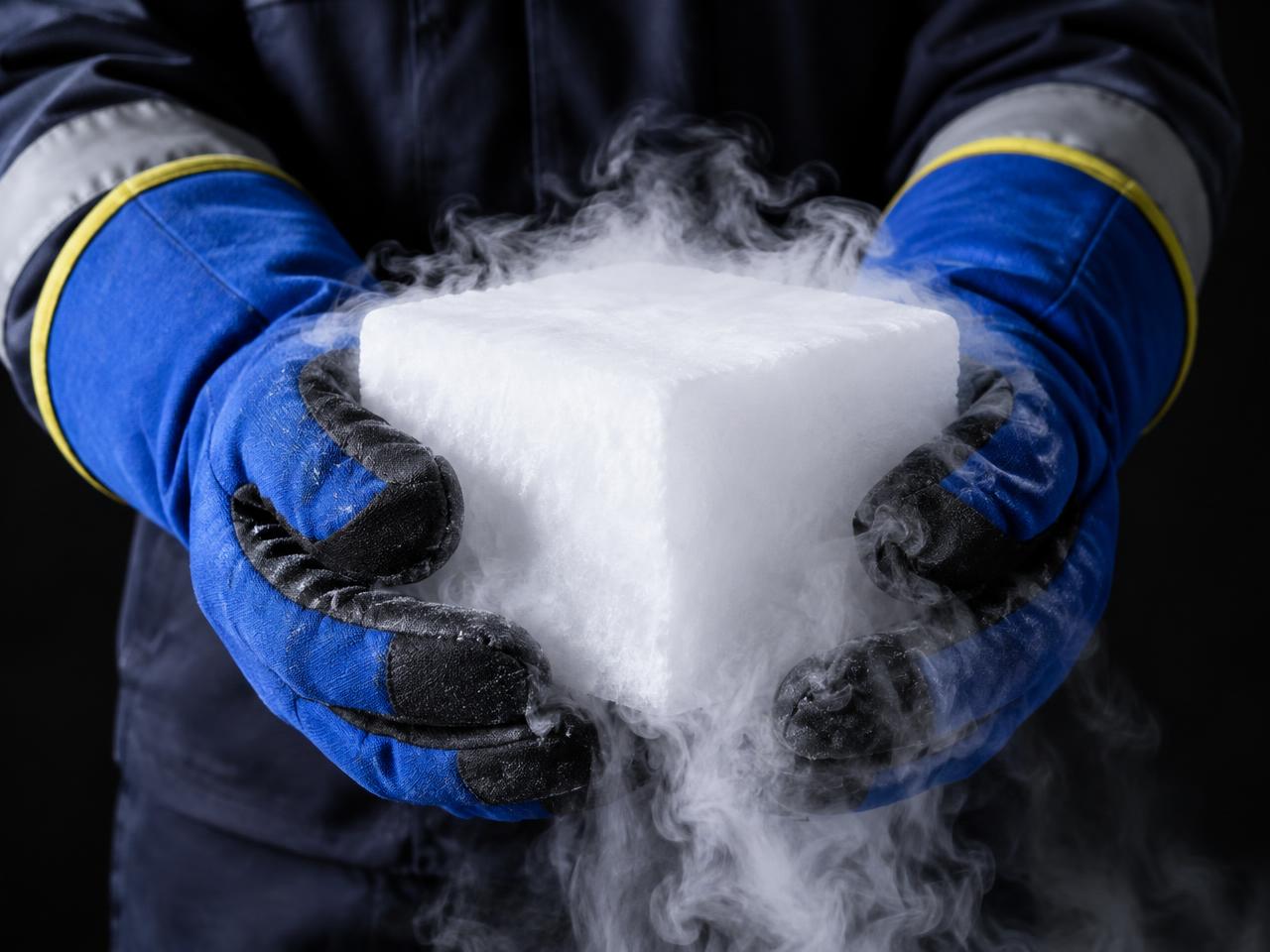
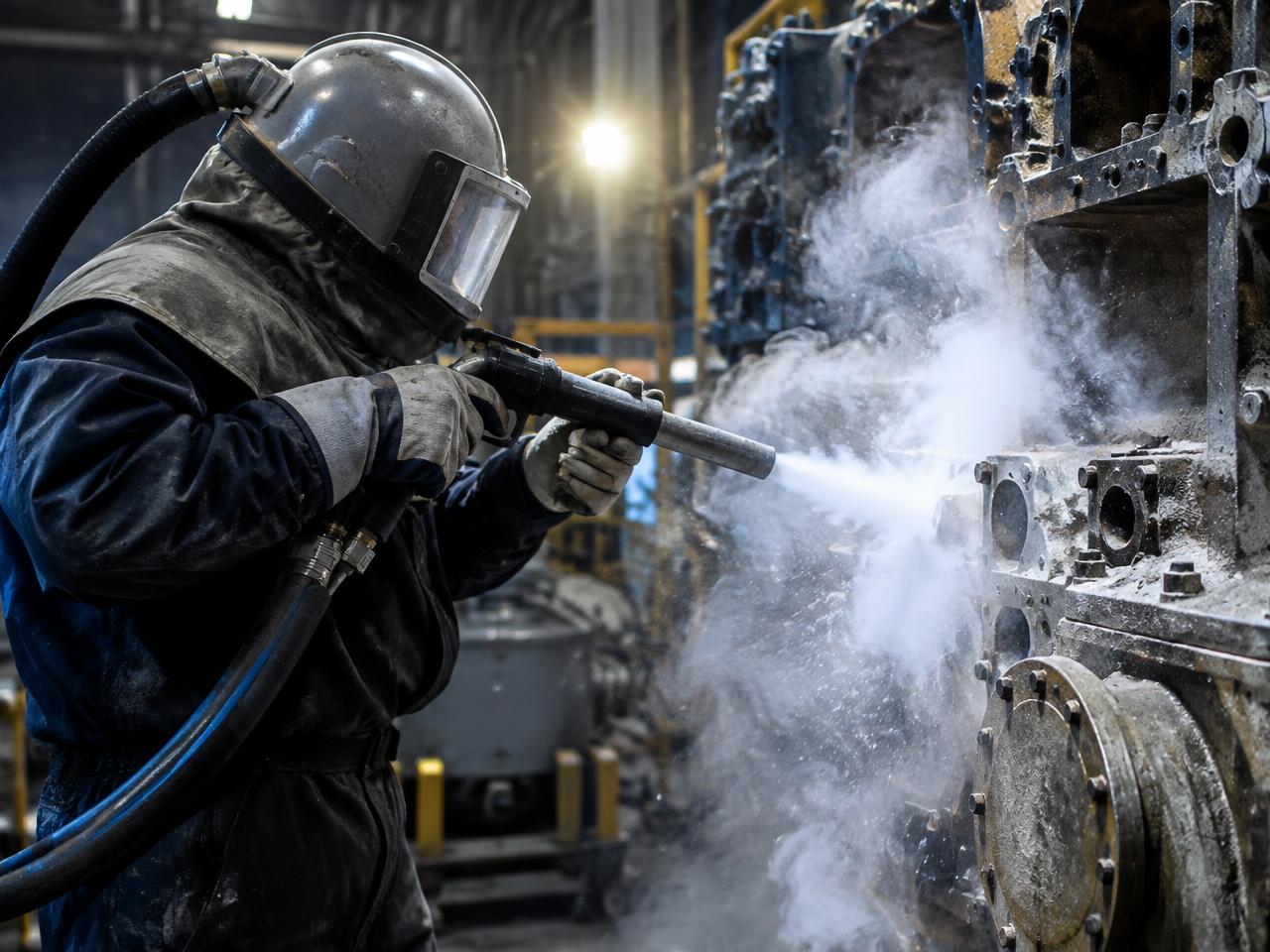
PA Dry Ice offers dry ice blasting demonstrations for a wide range of industries. See how solid CO₂ pellets remove contaminants without water, chemicals or leftover blast media.
The science
Three Effects, One Pass
Dry ice blasting uses compressed air to accelerate solid carbon dioxide pellets at a surface. Three effects work together:
- Step 1
Impact
High-velocity pellets
Compressed air accelerates dry ice pellets that strike the surface and fracture the contaminant layer. - Step 2
Thermal shock
–109.3°F / –78.5°C
The extreme cold makes the contaminant shrink and turn brittle, weakening its bond with the surface. - Step 3
Sublimation
≈800× expansion
The pellet turns straight from solid to gas on impact, expanding rapidly and helping lift grime away.
What may be suitable
Grime, Surfaces & Applications
Common examples. A demonstration is the best way to confirm results on your own surfaces.
Grime & residue
- Grease & oils
- Release agents
- Carbon & soot
- Resin & polymers
- Adhesives
- Paint & coatings
- Baked-on food residue
- Core sand
Surfaces
- Steel & stainless steel
- Aluminum
- Polished molds
- Rubber
- Plastics
- Composites
- Stone & brick
- Electrical components
Applications
- In-place mold cleaning
- Production lines
- Ovens & conveyors
- Weld cells
- Paint stripping
- Deburring & deflashing
- Fire & smoke cleanup
- Restoration
Industries
Demonstrations for a Wide Range of Industries
Manufacturing & Molding
- Automotive
- EV battery lines, tire and trim molds, weld cells, engine restoration.
- Plastics, Rubber & Composites
- Injection molds, polyurethane molds, rubber press plates.
- Foundry & Metal Fabrication
- Core boxes, permanent aluminum molds, casting dies.
Precision & Process
- Aerospace & Aviation
- Composite tools, turbine blades, avionics, landing gear, paint stripping.
- Medical Device & Semiconductor
- Sensitive electronics, micro-deburring, medical mold preparation.
- Food & Beverage Processing
- Ovens, conveyors, coffee roasters, packaging machinery.
Heavy Industry & Facilities
- Power Generation & Utilities
- Generators, turbines, insulators, switchgear, motor windings.
- Wood, Mining, Oil & Gas, Packaging
- Heavy machinery, rollers, printing presses, drill bits, conveyors.
- Restoration & Remediation
- Mold remediation, fire and smoke damage, historic stone and brick.
See it on your own surface before you decide.
Request a DemonstrationWhat to expect
How a Demonstration Works
Typical flow; details are confirmed by our team for each request.
- Step 1
Discuss your application
Tell us the surface, contaminant and how you clean it today. - Step 2
Plan the demo
We confirm whether it's a good fit and how, where and when it would happen. - Step 3
See it in action
Watch dry ice blasting on a representative area. - Step 4
Review results
Look at the result together and talk through next steps.
Fit check
Is Your Application a Good Fit?
Often a good fit
- Grease, release agents, carbon, soot or resin build-up
- Equipment that shouldn't get wet or be taken apart
- Surfaces that grit or wire brushes would damage
- Areas where water runoff or chemicals are a problem
Talk to us first
- Heavy rust or coatings that need a surface profile for recoating
- Very hard deposits such as cured concrete
- Thin or soft coatings, decals and delicate finishes
- Small, poorly ventilated or noise-sensitive spaces
Request a demo
What to Include in Your Request
- Surface / material — e.g. steel mold, conveyor belt, electrical cabinet
- Cleaning challenge — what needs removing and your current method
- Location — city or ZIP
- Preferred timing — dates or timeframe that work
FAQs
Demonstration Questions
What happens during a demonstration?
We discuss your surface and cleaning challenge, then show dry ice blasting on a representative area so you can see results before deciding. Format, location and timing are confirmed with you when you request one.
Can you demonstrate on my equipment?
Tell us the surface or material and what you need removed. We'll confirm whether it's a good fit and how it would be arranged.
Is dry ice blasting safe for food processing equipment?
Dry ice blasting is widely used in food processing because it uses no water or chemicals. Confirm suitability against your own food-safety plan and regulatory requirements.
Can it be used on electrical equipment?
Dry ice is non-conductive and leaves no moisture, which is why it's used on electrical components. Any work on or near energized equipment must follow qualified electrical-safety procedures.
Is dry ice blasting loud?
Yes. Blasting is loud and releases CO₂ gas, so hearing protection and good ventilation are needed. We'll discuss site requirements when planning.
See it on your surfaces
Tell us the material, the cleaning challenge and your timing — the PA Dry Ice team will follow up.